.

.
Click above for what became the consented plan, plus Transport page.

2013-03-09

"Hendon MP Matthew Offord gives backing to people living on 'uninhabitable' estate"


Link to Barnet Times

"Residents of a dilapidated council estate set for major regeneration are being left to live in 'uninhabitable' conditions, according to an MP.

"Matthew Offord has pledged to put pressure on Barnet Council and developers in charge of the West Hendon regeneration [originally part of the Brent Cross Cricklewood regeneration area] to sort out the 'big problem'.

"Council leader Richard Cornelius said:
"Getting these major regeneration schemes going is real challenge in the deep recession we have had. But as our proposals for the regeneration of Dollis Valley show, this can be done."


[Reposted] Video: Memories of Cricklewood [Brent Cross South] 1911-1925


"Arthur was born at 27 Olive Road in 1911, and lived there until his mid-teens before emigrating to Australia. His daughter Sue kindly shared part of Arthur's journal, where he'd recalled his childhood years living in Cricklewood. This video has those memories narrated, along with historical photos from Brent Archive's incredibly brilliant online catalogue http://brent.adlibsoft.com/ (you could spend hours lost in it, it's amazing). It was made for the Olive Road Jubilee street party."

Until Fri 22 March: "The Open Office: a drop-in centre for neighbourhood planning"


Link to The Guardian

"Even to many planners, the finer points of neighbourhood planning remain a mystery.

"A new project at London's Architecture Foundation, masterminded by young architecture practice We Made That, aims to tackle this problem, and put the workings of localism on public show for all to explore – and take part in.

"Holly Lewis, co-director of the practice with Oliver Goodhall, said:
"We were fascinated by the fact that communities were being given the power to write their own future, and yet they weren't being shown how to do it. The built environment professions haven't traditionally been very open or communicative, and people aren't really taught about planning at school or on TV – it's a very murky process. You may be familiar with house extensions, but the idea of being able to write policy is completely alien."
"The Open Office, which will run until 20 March at the Architecture Foundation's street-fronting gallery in Southwark, is conceived as a live project space, part "Citizens Urban Advice Bureau", part functioning practice. 

"Staffed by We Made That, along with a changing group of six to eight volunteers, the team will explore different case study areas on a week-by-week basis – from the emerging neighbourhood plan for Hackney's Chatsworth Road, to Croydon town centre and the Southall industrial area.
"Oliver Wainwright will be chairing the final session, Learning from The Open Office, on Wednesday 20 March, from 7pm, at the Architecture Foundation."

Link to The Architecture Foundation

"We Made That – The Open Office"
Until 22 March 2013
Tues – Sat, 12 – 6pm


Weekly Daytime Events:

"The Open Office will be running weekly research projects that will culminate in Friday lunch-time presentations hosted in The AF Project Space.

"All Friday Pin Up events are free and open to all (no need to RSVP). Space is limited however, and the events will operate on a first come, first served basis."
Week 4 (12 - 16 March)
Study area: Somerstown neighbourhood
Key question: "Given its reliance on volunteers, how can neighbourhood planning be truly representative?"
Friday Pin Up: Friday 15 March, 12.30 - 1.30pm
Week 5 (19 - 22 March)
Study area: Southall industrial area
Key question: "How can neighbourhood planning support diverse economies?"
Friday Pin Up: Friday 22 March, 12.30 - 1.30pm
Additional events: (click for details)

Michelle Provoost:
'No such thing as Community?'
Wed 13 March 2013, 7pm

'We Made That: Learning from The Open Office'
chaired by Oliver Wainwright
Wed 20 March 2013, 7pm

Urban Pioneers

"The Architecture Foundation's Urban Pioneers education programme engages teams of 16-19 year olds in areas of cities undergoing dramatic change. Young people are empowered to critically explore the transformations happening around them and develop new skills through a series of workshops with professionals including architects, engineers, film makers, artists, designers and writers."

Croydon Urban Pioneers
January - May 2013

"The Architecture Foundation's Urban Pioneers programme is to going south for the winter, to Croydon. We will be running a series of creative workshops with architects, artists and designers to examine the built environment, and will be recruiting 10 young people from the London Borough of Croydon.

"If you would like more information, please contact The Architecture Foundation's Education Manager, Tom Keeley.

"The Urban Pioneers Programme is sponsored by Rogers Stirk Harbour + Partners, with additional sponsorship for the Croydon Urban Pioneers from Westfield and [yikes!] Hammerson."

Daily Telegraph: "London property – the ultimate investment?"


Link to web site

"Is investing in property in London the nearest thing you can get to a safe bet? Property prices in the capital keep rising, despite wider problems in the housing market.

"In fact the gap between property values in the capital and in the rest of the country is now wider than ever, according to new data from estate agents Savills."

2013-03-08

Thurs 21 March: "The Future Of Transport In Finchley"


Join us for a Future Of Transport In Finchley discussion evening at Avenue House. We have invited a panel of experts to field your questions and stimulate a lively debate on all aspects of local travel. The motor car is often regarded as an indispensable accoutrement of modern living. But is it so absolutely necessary? And what is the true cost?

"We now have over 150,000 cars in the borough, more than 10 times the number we had 50 years ago. Our once practically empty roads are now jam packed and fume filled, pollution is at dangerously high levels and priority has been given to motor traffic at all costs. As roads have expanded, greenery has disappeared.But what about more sustainable forms of transport? Are we here in Finchley doing enough?

Have we joined the Mayor’s ‘Cycling Revolution‘? Could we be walking more? What about new technology like electric cars and hydrogen fuel cells? Are we planning a public transport infrastructure for future generations? Is the Council doing enough for sustainable future transport?

If you have any views or questions, please come along for what promises to be an interesting and stimulating discussion evening. Please submit questions in writing by March 15th.

For more details: 020 8346 5503 or Email: mikegee1968@gmail.com

Tues 12 March: Living Streets: "Talk with Sir Terry Farrell: Creating a better Westminster for pedestrians"


"Westminster contains some of the UK’s most iconic streets and public spaces.  It also suffers from some of the UK’s worst congestion and highest pedestrian casualty statistics.

"On Tuesday, 12 March 2013, Living Streets is partnering with Movement for Liveable London to discuss what can be done to make Westminster a better place for pedestrians and launch our new Westminster Living Streets Group.

"We’ll be joined by Living Streets CEO Tony Armstrong, Cllr Ed Argar of Westminster council, and our keynote speaker, architect Sir Terry Farrell."

Planning visionary

"Sir Terry is one of the world’s foremost urban planners and architects, who will be sharing his vision for a more people friendly Westminster.

"During 40 years in practice, he has transformed London’s skyline and animated the banks of the Thames with his Charing Cross and MI6 headquarters buildings.

"It is, though, through his long-term involvement in the region’s urban planning – through specific projects, as well as through advocacy and initiating public debate – that Sir Terry has made his greatest contribution. He is currently the government champion for the planning of the Thames Gateway and advises the Mayor of London on his Design Advisory Committee."

Where and when
Tuesday, 12 March 2013
Terry Farrell and Partners
7 Hatton Street
London NW8 8PL

Please join us from 6.30pm for 7pm.
No bookings are required. But if you would like to know more about this event, please contact Tom Platt at Living Streets – tom.platt@livingstreets.org.uk

"The sad tale of a cycle network innovator forgotten by the New Town he built"


Link to 'RoadsWereNotBuiltForCars'

  • Wide, smooth cycleways adjacent to main roads but separated from cars and pedestrians
  • Perpetually-lit, airy, safe underpasses beneath roundabouts
  • Direct, convenient and attractive cycle routes designed not by car-centric town planners but by a transport engineer who cycled to work every day
  • Priority given to cyclists at intersections
  • Schools, workplaces, shops: all linked by protected cycleways
  • Recreational bike paths to nature areas
  • Colour-coded sign-posting
  • Plentiful cycle parking in the town centre and at the rail station
  • An urban cycle network lionised at global conferences and the subject of lectures, books and magazine articles.


Amsterdam? Copenhagen? Groningen?
No. Stevenage.

2013-03-07

[Reposted] Dreams and nightmares

Brent Cross plan:
"A 'free-flowing' junction of the M1 with
the North Circular was considered."
(Above is a 1960s Glasgow plan:
"the Townhead Interchange (built) and
Eastern Flank [unbuilt] which would have severed
Glasgow Cathedral from the the rest of the city")

Brent Cross's Hammerson:
"We'll have some of this!"

Part of the collapsed car-based
Brent Cross scheme
"Dead in the Water" - Mayor Boris Johnson,
a month after saying: "It has great potential"

“Crossrail for the bike” in Mayor’s £913m cycling plan

7 MARCH 2013 - link to report (PDF)

"The Mayor of London, Boris Johnson, will create a 'Crossrail for the bike' as part of his plans for a nearly £1 billion investment in London cycling. The route will run for more than 15 miles, very substantially segregated, from the western suburbs through the heart of London to Canary Wharf and Barking.

"It will use new Dutch-style segregated cycle tracks along, among other places, the Victoria Embankment and the Westway flyover. It is believed to be the longest substantially-segregated cycle route of any city in Europe.

"The Mayor said:
“The Westway, the ultimate symbol of how the urban motorway tore up our cities, will become the ultimate symbol of how we are claiming central London for the bike.”
"The Mayor today announced that the main cross-London physical legacy of the 2012 Olympic Games will be a proper network of cycle routes across the city. As in the public transport system, London’s 'bike Crossrail' will lie at the heart of a new bike 'Tube network.' Over the next four years London will open a range of high-quality new cycle routes parallel to, and named after, Tube lines and bus routes, so everyone knows where they go.

"Other elements in the 'Mayor’s Vision for Cycling' include:
  • more Dutch-style fully-segregated lanes;
  • more 'semi-segregation' on other streets, with bikes better separated from other vehicles;
  • a new network of 'Quietways' – direct, continuous, fully-signposted routes on peaceful side streets, running far into the suburbs, and aimed at people put off by cycling in traffic;
  • substantial improvements to both existing and proposed Superhighways, including some reroutings;
  • a new 'Central London Grid' of bike routes in the City and West End, using segregation, quiet streets, and two-way cycling on one-way traffic streets, to join all the other routes together.


"The Mayor added:
“I want to de-Lycrafy cycling. I want to make it normal, something for everyone, something you feel comfortable doing in your ordinary clothes. Our new routes will give people the confidence to get in the saddle. I do not promise perfection, or that London will become Amsterdam any time soon. But what I do say is that this plan marks a profound shift in my ambitions and intentions for the bicycle.

The reason I am spending almost £1 billion on this is my belief that helping cycling will not just help cyclists. It will create better places for everyone. It means less traffic, more trees, more places to sit and eat a sandwich. It means more seats on the Tube, less competition for a parking place and fewer cars in front of yours at the lights. Above all, it will fulfil my aim of making London’s air cleaner. If just 14 per cent of journeys in central London were cycled, emissions there of the greatest vehicle pollutant, NOx, would fall by almost a third and over the years literally thousands of lives could be saved.”
"Today's plan includes major and substantial improvements to the worst junctions, making them safer and less threatening for cyclists with measures such as segregation and cycle-only paths or phases. Junctions to be tackled in the next three years include Blackfriars, Vauxhall, Tower, Swiss Cottage, and Elephant & Castle. The budget for TfL’s safer junction review has been more than quintupled, from £19 million to £100 million, and the money will be focused on fewer sites.
TfL is conducting off-site trials of new, cyclist-friendly innovations, such as 'Dutch-style' roundabouts and eye-level traffic lights for cyclists. If these trials are successful, and the Department for Transport allows, they will be rolled out on the road network.

"There will be 'mini-Hollands' in the suburbs, with between one and three outer boroughs chosen for very high spending concentrated in those relatively small areas for the greatest possible impact. The aim, over time, is that these suburbs will become every bit as cycle-friendly as their Dutch equivalents; places that suburbs and towns all over Britain will want to copy. Funding specifically earmarked for outer London will rise from £3 million to more than £100 million.

"Lorry safety will be a major focus of the plan, as they disproportionately kill and seriously injure cyclists. This work will build upon TfL’s successful work with the haulage industry and they will continue to work to encourage out-of-hours deliveries, to reduce the numbers of heavy vehicles in the city during peak times, and will closely study the experience of other cities where larger lorries are banned from parts of the city or at times of the day.

"The vision flags that the Mayor’s team will campaign for better laws that do not send the wrong message about the behaviour we expect on our roads. In the meantime, there will be funding for eight police officers to investigate cyclist collisions with HGVs, vigorously gather the best possible evidence and press for the toughest possible action under existing law.
Transport for London will work to pinpoint the most dangerous places using "Compstat"-style near-realtime monitoring of casualties. And new 20mph speed limits for all traffic will be introduced on several parts of the TfL-controlled main road network where cycling improvements are planned.


"Other work outlined in the Mayor’s vision for cycling includes a new pilot scheme allowing communities to design safe routes to school, and a new approach to children's cycle training, which will be delivered in all London schools. In conjunction with Network Rail, work will be carried out to deliver a massive Dutch-style bike superhub at a mainline terminus, with space for thousands of bikes and very good cycle routes radiating from it. The aim is that thousands of commuters switch from Tube and bus to bikes for the last stage of their journeys to work, significantly relieving pressure on the public transport networks in central London. Work will also take place with the train operators to deliver smaller superhubs at some key suburban stations.

"A trial of electric bikes will be conducted, including a small self-contained public electric bike hire scheme, similar to Barclays Cycle Hire.

"Work will continue to expand the Mayor’s flagship Barclays cycle hire scheme later this year into parts of Wandsworth, Lambeth and Hammersmith & Fulham.  But the Mayor’s vision also flags how he will investigate further incremental expansion of the network and integrate it into contactless payment, TfL's future ticketing system, to make it a fully joined-up part of the transport network.  Companies, hotels and universities will be encouraged to install docking stations in their premises at their own expense for their staff, guests and students.

"As announced in the TfL business plan the overall budget for cycling will rise to £913 million, two and a half times more than previously planned, with almost £400 million spent in the next three years alone. Cycle spending will rise to £145 million in 2015, or around £18 per head, up with the best in Germany and almost on a par with the Netherlands.

"Sir Peter Hendy, Transport Commissioner for London, who was with the Mayor at the launch, said:
“Across the Western world, forward-thinking cities are investing hundreds of millions of pounds in the bicycle, knowing that well-designed schemes can deliver benefits far greater than their relatively modest cost.

These policies are a step-change in cycling provision, and I commit TfL to delivering them as one of its highest priorities. But I am committed, too, because I believe this is about so much more than routes for cyclists. It is about the huge health and economic benefits that cycling can bring. And it is about helping the transport system meet the enormous demands that will be placed on it.”
British Cycling's Chris Boardman, the Olympic gold medallist and long-term advocate for better cycling, who joined the Mayor and Sir Peter, said:
"This is the most ambitious cycling development and promotion plan in the UK in living memory, perhaps ever. I'm delighted to have been involved and look forward to the great changes it will bring to London."
"The first Quietways will open next year, with the improved Superhighways and the central section of 'bike Crossrail' complete by 2016. All outer London boroughs are invited to apply for the 'mini-Hollands' programme. The successful candidate(s) will be chosen later this year and work will begin in 2014.

"TfL will work in close partnership with the London boroughs, who own the vast majority of the capital's roads, to deliver the new cycle routes. The first planning conference for the Central London Grid, with the seven central boroughs, the Royal Parks and the City, will take place next week. Routes for the Grid, and Quietways, will be announced as soon as they have been agreed with the boroughs.

Baroness Jo Valentine, Chief Executive of London First, said:
“The is a visionary proposal from the Mayor to improve cycling infrastructure in London.  It should be part of a wider debate about how we use scarce road space and accommodate all those who need to get around the city, whether for pleasure, on business or to make deliveries. London has long needed a joined up transport strategy that effectively integrates all modes of transport and this move to encourage more people to cycle is a welcome first step.”
Councillor Ed Argar, cabinet member for city management, transport and environment at Westminster City Council, said:
"I share the Mayor's vision and ambition. We will work with him to make a real step change a reality on our streets."
Councillor Sarah Hayward, Leader of Camden Council, said:
"Camden is prioritising and delivering excellent provision for cyclists in the borough, from commuters to weekend enthusiasts. We welcome further investment in the network, and a linking up of the cycle routes across London, improving air quality and reducing congestion. Camden will be at the heart of the plans so we are looking forward to working with the Mayor to get the best cycling facilities for our residents and businesses."
German Dector-Vega,  London Director of Sustrans, said:
“It’s great to see cycling being championed by politicians like Boris Johnson, particularly as fuel prices rise and we struggle to find opportunities to live healthy lives. The London experience shows that real progress can be made through committed political leadership that listens to the voice of cyclists and creates a long-term vision for cycling.

The Mayor’s latest plans include a raft of ideas that will help cycling become a genuine choice for getting around, particularly new riders and those in outer London. As ever, the devil will be in the detail and Sustrans looks forward to working with the Mayor, local authorities, Transport for London and cyclists themselves to ensure we grasp every opportunity to make our roads safer, our cycle network better and, crucially, train and inspire more Londoners to get on their bikes.”


BBC: "How London bloggers changed cycling"


Link to web site

"Aside from the infrastructure - which cyclists will no doubt judge when it is delivered - this is also a big day and a victory for London's cycling bloggers.

"These sites - among others - started campaigning for improvements to cycling safety in the years before the last Mayoral election. They were a thorn in the side of the Boris Johnson administration."

2013-03-06

Daily Telegraph: "The gap between rich and poor will continue to grow until we give up on QE"


Link to web site

"The world's rich are getting richer. The Forbes billionaire list was published this morning (there are now 1,426 of them globally in dollar terms, with 210 new entrants in the last year), and collectively they are $800bn richer than they were a year ago. Each billionaire is, on average, $100m richer than in 2011, with an average wealth of $3.7bn.

"It can hardly be a surprise. Across the world, stock markets are booming. Bond prices are also strong in developed markets, despite those same sovereigns usually being mired in a debt crisis.... Strong stocks and strong bonds are an unusual mix. ... What is unusual about the present climate is that so much money has been created by central banks that there is sufficient available to create a bubble in, well, everything.

"This has a lot to do with how QE operates. Unlike straight money printing, it is designed to transfer money to banks, not to the consumer or to the government. ... The main reason that QE has not been catastrophically inflationary is that so little of it has filtered down to the high street. For the most part, it has simply pushed up values across the board in the financial markets."

Hammerson is after Paris's Beaugrenelle: "Ah, drink a cognac watching the sunset over the North Circular Road; view the city from the top of the 140m Brent Cross waste incinerator chimney; eat a gourmet picnic on a 266 bus to Acton..."


Property Investor Europe News:

"UK-based REIT Hammerson is interested in acquiring French REIT/SIIC Gecina's Beaugrenelle shopping centre in Paris when it is put on the market, says Hammerson France MD Jean-Philippe Mouton.

"Gecina has said it will eventually look to sell the 45,000 sq.m. mall, which is due to open in September."


(Life of PIE)


(cliquer sur the image above)

A NEW SHOPPING EXPERIENCE IN BEAUGRENELLE PARIS
"Beaugrenelle offers a new way of experiencing shopping in the French capital; it is also an invitation to take a stroll on the banks of the Seine (les Quais de Seine). The city’s lovers will be able to come and feel the pulse of Paris…"

AN ORIGINAL ARCHITECTURAL CONCEPT
"Beaugrenelle is neither a shopping center, nor a department store; it offers visitors a brand new way of living a Parisian experience of shopping and leisure.
"The Rue Linois acts as a crossroads, a meeting point between the Left and Right Banks of the Seine: it is now undergoing a great transformation and becoming a brand new high street for the French capital.
"Designed around islands and open-spaces, Beaugrenelle offers many perspectives on the Seine and the Parisian landscape."

A RESOLUTELY EVIRONMENTALLY-FRIENDLY DESIGN
"To meet the designers’ vision of excellence and quality, the Beaugrenelle project and all the brands and retailers have worked together to establish a sustainable development contract. The contract applies to both indoor and outdoor areas (HQE® and BREEAM norms and regulations)."


"An invitation to take a stroll on the banks of the A406..."
(Link to 'CBRD' web site)

"Glass pavilion in the sky will transform the Cinderella Southbank." (Whereas 'leisure' at Brent Cross will be an out-of-town - instead of high street - new cinema)


Link to Evening Standard

"The Southbank Centre is to undergo a radical £120 million transformation that includes a new glass pavilion in the sky, it was announced today.

"The Queen Elizabeth Hall, Purcell Room and Hayward Gallery are to be re-named the Festival Wing and closed for up to three years while the revamp takes place. But the end result will be new space for performances, exhibitions and socialising, carved out of reclaimed and forgotten corridors and plant works on the 21-acre site.

"The project will bring the Sixties buildings up to the standard of the slightly older Royal Festival Hall, which underwent a renovation at similar cost six years ago."

2013-03-05

# "Bre-nt. Cross the Mersey,..." # (Gerry and their Pacemakers)


Link to The Guardian

"A £5.5bn redevelopment of Liverpool's docklands that will dramatically alter the Merseyside skyline is set to begin after it was waved through by the government, despite warnings that it puts in jeopardy the city's prized Unesco world heritage site status.

"The Liverpool Waters project includes 9,000 apartments, hundreds of offices, hotels, bars and a new cruise terminal on 60 acres of derelict dockland. The Peel group also wants to build two clusters of skyscrapers, including a 55-storey tower, which would become the tallest building in north-west England."


Post-war Housing and Leisure. (As opposed to Hammerson's proposal for an out-of-town cinema at Brent Cross. Just saying.)


Lambeth Towers, opposite Imperial War Museum
Link to The Guardian
"The architect George Finch has died, aged 82, at the height of a campaign to save his Brixton Recreation Centre, in south London, designed in 1971 and opened in 1985.

[In 1950,] he was appointed by the London County Council to ginger up a team of elderly surveyors, whose repetitive scheme for Spring Walk, Stepney, had been rejected.

"Finch's design exemplified the best of mixed development, the dominant ideology for housing in the 1950s, with a 10-storey block of flats that gave space for old people's flats and two-storey houses, unique in central London at the time. Flats at the top of the tower had roof gardens. It was followed by work on the Suffolk Estate in Haggerston, an early low-rise, high-density scheme, again with houses as well as flats.

"The halcyon days for LCC housing ended with the reorganisation of London government in 1965, when responsibility for most house building passed to the boroughs. Finch joined the new architect's department created at Lambeth in 1963 by Edward Hollamby, also from the LCC. 

"Hollamby adopted a pre-cast system for six tower blocks on landmark sites to relieve the borough's most urgent needs, while his department explored low-rise solutions and refurbishment. Finch made a detailed study that refuted system-building's claims to be quicker and cheaper than conventional construction, but he contributed to the heavily articulated towers, giving them a distinctive profile and setting them at angles he described as 'dancing around'."


Link to Lambeth Towers, on 'Utopia London'


George Finch - Brixton Rec from utopialondon on Vimeo.

2013-03-03

[Reposted] LGA: "Alternative high street: Rethinking the town centre challenge"


Link to PDF
(from early-2012)

"For better or for worse, our town centres are changing, responding to powerful socio-economic trends driving shifts in retail behaviour.

"Locally, there is consensus among town centre partners that new approaches are needed to ensure high streets adapt successfully, the merits of which are drawn out by the contributions to this report.

"Nationally, Mary Portas, like most other national commentators, has pointed to plummeting retail spend in town centres as the beginning of the end for high streets.

"But it is crucial that we begin to think more positively about the challenge facing our town centres. Retail is not the future, and town centres are adapting. We have to go back to the start, moving beyond retail, and refocusing places as centres of social, community and cultural economies.

"This is our vision for the alternative high street."

Mail on Sunday: "One in four of the UK's top companies pay no tax, while we give THEM millions in credits"


Link to web site

"Almost one in four of Britain’s biggest listed companies paid no corporation tax in this country last year – and almost half fail to disclose their tax payments to the UK at all, according to research by 'The Mail on Sunday'.

"Analysis of the latest annual reports and accounts of all the companies in the FTSE 100 found that 47 companies gave no obvious figures for tax paid in Britain.

"Of the 53 who did, 12 showed they paid no tax at all, and, of these, six actually received a tax credit."

Retail Gazette: "Hammerson reports 'transformational' year" (From Boris's "Dead in the Water," to new Brent Cross out-of-town cinema? That's progress?)


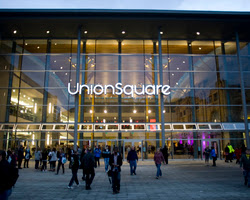
Hammerson Union Square Aberdeen
Link to web site

"2012 was a transformational year for Hammerson, where we successfully executed over £1 billion of investment activity, to become a pure retail-focused company." [It's also useful that our employee share scheme is run from an off-shore tax-haven, isn't it? And it's great that we partner another off-shore tax-haven company in developing some of Brent Cross!]

"Looking forward, our visibility of the future earnings profile of the business [who wrote this?] gives us confidence, and we continue to seek opportunities to enhance the scale and efficiency of our business through further acquisitions." [Assuming Westfield doesn't swallow us first.]

Lobbying the Greater London Assembly, Tom Copley and all: Questions to Boris (Sustainability, not out-of-town cinema!)


2013-03-02

[Reposted] "Towards a Brent Cross Vortex Sutra" (Now, you don't say THAT every day)


Click on the picture, 
c1965, to enlarge.
"Lest the amateur
psychogeographer
feels the need to sneer at the
cultural shallowness
of Brent Cross..."


(as if we would!)


- visit this site here.


Also link to:
"Brent Cross - the North-West Passage"

and even venture (in a new window) to:
"The Brent Cross Omphalos"

2013-03-01

Daily Telegraph: "Historic market town in Dorset becomes latest community to battle Tesco over superstore plans"


"Here's one I prepared earlier"
Link to web site

"Virtually every person in Sherborne, which is home to an 8th Century abbey, is fighting to prevent their community from turning into a 'Tesco Town'.

"Former Blue Peter presenter Valerie Singleton is one of 8,500 people (out of a population of 9,350) to have signed a petition against the superstore. Retail expert Mary Portas, who campaigns on behalf of small high street shops, is also supporting their cause.

"Unlike most other British towns, historic Sherborne in Dorset has so far been immune to the wave of more than 3,000 Tesco outlets that have sprung up across the country."

Daily Mail: "Amazon's human robots: Is this the future of the British workplace?"


Link to web site

"As online shopping explodes in Britain, helping to push traditional retailers such as HMV out of business, more and more jobs are moving from High Street shops into warehouses like this one.

"Under pressure over its tax arrangements, Amazon has tried to stress how many jobs it is creating across the country at a time of economic malaise.

"The undisputed behemoth of the online retail world has invested more than £1 billion in its UK operations and announced last year that it would open another three warehouses over the next two years and create 2,000 more permanent jobs.

"Amazon even had a quote from the Prime Minister, in its September press release. David Cameron said:
"This is great news, not only for those individuals who will find work, but for the UK economy."

Streetsblog: "Sprawl Madness: Two Houses Share Backyard, Separated by 7 Miles of Roads"


Link to web site

"Just how absurd have American development patterns become over the past few decades?
"Behold: Two houses with adjoining backyards in suburban Orlando. If you want to travel the streets from point A on Anna Catherine Drive to point B on Summer Rain Drive, which are only 50 feet apart, you’ll have to go a minimum of seven miles. The trip would take almost twenty minutes in a car, according to Google Maps.
"Windy street patterns, full of cul-de-sacs and circles, have become such a ubiquitous feature of the suburbs that they mostly escape remark.
But disconnected streets have many insidious consequences for the environment, public health, and social equity."

"Are building regulations the enemy of architecture?"


Link to The Guardian

"Building in the UK is a dense minefield of rules and regulations that governs everything from the size of windows to the pitch of rooftops, the depth of stair treads to the gradient of slopes – even where to put light switches. From overlooking distances to rights to light, every aspect of a new building has been quantified and calibrated before the designer even sets pen to paper.

"...The Nigerian capital of Lagos is a seemingly chaotic frenzy of ad hoc urbanism, [but] research unearthed the obscure 'LSPD Regulation 15', which defines the city-wide setback rule – the distance every development must step back from its legal boundary.

"A regulated no-man's-land between buildings and the street, ranging from three to nine metres, this buffer zone in fact turned out to be the most lively and dynamic part of the city's fabric. 'It allows Lagosians to take personal responsibility for themselves. Nothing is legally sanctioned within this zone, yet – somewhat counterintuitively – anything can happen. The setback is a legally defined zone of extra-legal tolerance'." 
The subject will be debated at the RIBA on Tuesday 5 March, at Constraint and Creativity: Is Red Tape the Enemy of Architecture? Liam Ross will be joined by Tom Mullarkey from the Royal Society for Prevention of Accidents, Piers Gough of CZWG Architects, Alex Ely of Mae Architects, Tim Gill of Rethinking Childhood, and Finn Williams of Common Office. The exhibition runs until 27 April, and Guardian Extra members can buy tickets for the talks at the discounted rate of £5.

"Westfield mall ‘twins’ ring up £2bn sales after Olympic shoppers flood in"


Link to Evening Standard

"The Westfield shopping centres generated almost £2 billion of sales last year, as thousands of Olympic visitors flooded through the new Stratford mall.

"The first full year of opening for both Westfield 'twins' drew almost 70 million people to the malls in Shepherd’s Bush and the East End.

"The 'Westfield effect' hit the number of shoppers visiting the West End, where footfall slumped 2.7 per cent last year in what was described as 'a clearly disappointing' result in a new report."


Brent Cross's Hammerson is now a junior partner in 'Westfield Croydon'.

"Hammerson [rival to Westfield, had] presented pre-application proposals for a similar retail and leisure mix, with its housing element of around 300 flats largely provided by revamping the existing Centre Tower in the Croydon Whitgift shopping complex.

"The largest difference between the two schemes is in the overall design concept, with Westfield opting for a covered centre, while Hammerson favours a more open development of shopping streets and squares.

"Both developers want to attract a major department store into the town and favour John Lewis."

Read more: thisiscroydontoday
Follow: @thisiscroydon on Twitter | thisiscroydontoday on Facebook